

Martyrs of La Florida

Updated: Apr 19
In 2023, I was working as the Pastoral Associate at St. Paul Catholic Church in Riverside, a neighborhood of Jacksonville, Florida. The parish invited Dr. Mary Soha to present on the Martyrs of La Florida. For many years I was aware of Dr. Soha, she gave many presentations to the seminarians but for some reason or another I was never able to attend, sadly. This time, fortunately, I was able to go to the parish function and I found the story very inspiring.
I asked to sit down with Dr. Soha and talk more about the Martyrs and about colonial life under Spanish rule in general. We talked for a while about the tribal leaders of the Timucua peoples, specifically Antonio Inija in the later years. When I learned that Antonio was a prolific flautist and guitarist, I immediately began to hear the echoes of those instruments against the backdrop of my treasured Floridian landscape. My imagination ran wild as we discussed the explosion of the Catholic faith across North Florida. I immediately thought of the La Folia chord progression from Iberria, which would have been popular at the time of Spanish colonization–a catechetical dance between the Spanish and the Timucua. My heart broke when Dr. Soha told me about Antonio’s crucifixion and the martyrdom of the Catholics at the hands of the British and Creek.
At the end of our conversation, Dr. Soha left me with a prayer card of Antonio. On the back was an English translation of a Timucuan prayer to Mary, most likely recited after Communion. As I read the simple offering, I was struck by the well-formed faith of these people. I reached out to the translator of the prayer, Dr. Aaron Broadwell at the University of Florida, asking him for the original Timucuan text. He was gracious enough to oblige, and I found myself with all the materials needed to memorialize the Martyrs in song.
From the Summer of 2024 to the Spring of 2025, I wrote four movements reflecting the elements previously mentioned: I. Antonio, II. El baile, III. Dissolution, IV. Timucuan Marian Prayer. I then took these movements to my friend and mentor, Don McCullough, and he gave me very honest feedback about what worked and what didn’t work. With my red pen in hand, I marked the areas where I could improve. Over the Summer I made significant edits, re-orchestrating entire passages, writing new material to bridge musical ideas, and erasing beloved parts that were dragging the work down–“killing my darlings,” as they say.
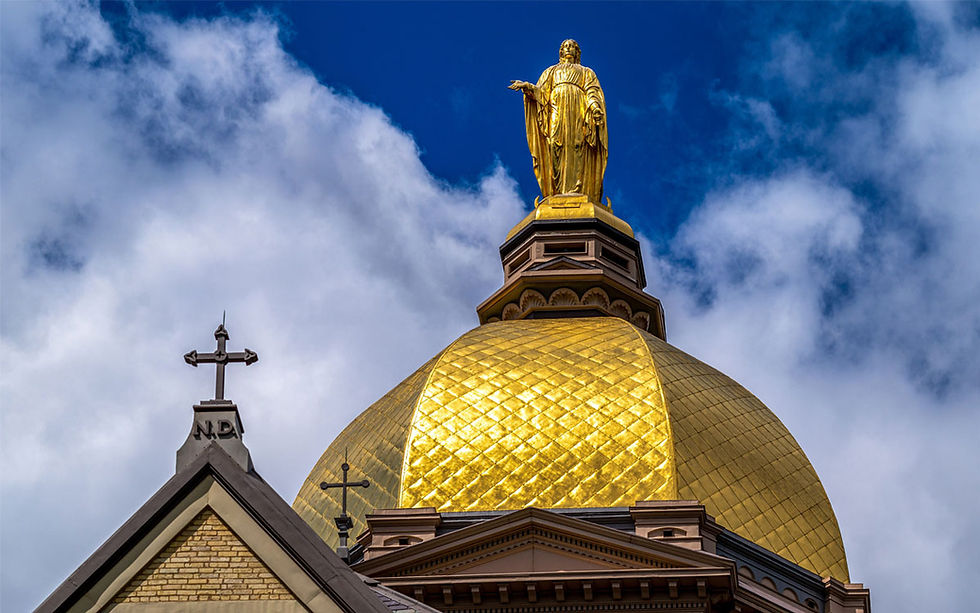
In October, I hosted a little “premiere” of the finished symphony at my apartment in Notre Dame, IN. Folks from the theology department came by to encounter the Martyrs of La Florida for the first time. On the one hand, it is a niche part of Florida Catholic history. On the other, it is a remarkably relatable story of faith and persecution that resonates with all Americans and people from around the world. My ancestry is predominantly German with zero roots in the indigenous peoples of the Americas, so the question of whether or not I was the most suitable composer for the subject matter weighed heavily on my heart. However, my Catholic identity–along with being born and raised in North Florida–ultimately assured me that I could do the Martyrs justice. You can read more about the Martyrs here.


Comments